The Golden Age of Piracy, a thrilling and often brutal chapter in maritime history, gave birth to legends whose tales still captivate us today. Among the most enduring aspects of these infamous figures are their distinctive appellations – those Berühmte Piraten & Ihre Spitznamen that echoed across the high seas, striking fear into the hearts of merchants and inspiring awe among their crews. More than mere labels, these nicknames were badges of identity, symbols of terror, or even ironic descriptions, shaping the very myths that followed these swashbucklers long after their ships sank beneath the waves or their careers ended at the gallows.
A pirate’s name was their brand, a carefully cultivated persona designed to precede them, influencing reputation and strategy. It transformed ordinary men and women into figures larger than life, becoming an integral part of their enduring legacy.
At a Glance: The Enduring Power of Pirate Nicknames
- Identity & Fear: Nicknames weren't just for fun; they were strategic tools to intimidate enemies and rally crews.
- Reflected Reality: Many nicknames derived from physical traits, origins, or defining personality quirks.
- Legends Made: These monikers helped cement pirates' places in history, often becoming more famous than their true names.
- Cultural Icons: From "Blackbeard" to "Captain Kidd," these names leap off the pages of history into modern films, books, and games.
- Mystique Builders: The ambiguity of a nickname often added to a pirate's mysterious aura and the legends surrounding their hidden treasures.
What's in a Name? The Psychology of a Pirate's Moniker
Imagine the terror inspired by a name like "Blackbeard" before you even saw his terrifying visage, smoke curling from his fuse-lit beard. Or the chilling reputation of "Black Bart," a name whispered across the oceans, synonymous with ruthless efficiency. Pirate nicknames weren't chosen lightly; they were a calculated part of a pirate's arsenal, a psychological weapon wielded with as much precision as a cutlass.
These monikers served multiple crucial purposes within the rough-and-tumble world of piracy. For one, they provided a sense of identity and camaraderie among the crew, often distinguishing a pirate from their former life. Many adopted pseudonyms to escape their past or hide from authorities, creating a new persona far removed from their mundane origins. But perhaps most importantly, a fearsome nickname was invaluable for intimidation. A ship’s captain might surrender simply upon hearing the name of the approaching pirate, saving the buccaneers the trouble of a prolonged battle.
Moreover, nicknames often became shorthand for a pirate’s unique brand of villainy or even their surprising traits. They could encapsulate their appearance, a defining characteristic, or a notorious deed, forever linking the individual to their legend. It was through these evocative names that many of the most celebrated and feared figures of the Golden Age of Piracy carved their indelible mark on history.
The Rogues' Gallery: Famous Pirates and Their Unforgettable Nicknames
The annals of piracy are filled with names that still send shivers down spines and spark the imagination. These are the men and women whose exploits, both real and exaggerated, cemented their nicknames in the collective consciousness.
Edward Teach: The Terrifying Blackbeard
Perhaps the most iconic name in pirate lore, Blackbeard belonged to Edward Teach. His nickname was no exaggeration; Teach cultivated a fearsome image, his long black beard braided with ribbons, and during battle, he'd light slow-burning fuses under his hat, emerging from the smoke like a demon. Sailing the North American coast aboard his ship, the Queen Anne’s Revenge, Blackbeard epitomized the pirate terror.
His reputation, amplified by his appearance, allowed him to plunder immense riches without firing a single shot on many occasions. Though his vast treasures were never found after his death in 1718, tales of his buried loot fueled generations of treasure hunters. The discovery of the Queen Anne’s Revenge off North Carolina in the 1990s brought tangible artifacts from his legend back to light, confirming the reality behind the myth. Blackbeard wasn't just a pirate; he was a master of psychological warfare, using his appearance and his ominous nickname to maximum effect.
Bartholomew Roberts: The Dashing Black Bart
Known as Black Bart, Bartholomew Roberts was one of the most successful pirates of all time, reportedly capturing over 400 ships. His nickname likely stemmed from his dark complexion or perhaps the dark shadow he cast across the shipping lanes. In stark contrast to his fearsome deeds, Roberts was known for his surprisingly dapper appearance and his strict code of conduct among his crew. He was a ruthless pragmatist, however, and his operations stretched across the Atlantic, from the Caribbean to the coast of West Africa.
Black Bart's conquests amassed significant wealth in gold, silver, and other valuables. Yet, like many pirate captains, the precise location of his amassed fortune remains a mystery following his death in battle in 1722. Speculations about hidden treasures along the West African coast continue to fuel tales of his legendary success, largely thanks to the indelible image his nickname conjures.
Samuel Bellamy: The Romantic Black Sam
Black Sam Bellamy, a pirate with a reputation for romance and a Robin Hood-esque generosity, cut a different figure than his more brutal contemporaries. His moniker, "Black Sam," is thought to refer to his dark hair, rather than any sinister deeds. Bellamy was known for his fairness towards his crew, a stark contrast to many captains who hoarded their bounty. He frequently preyed on ships off the American coast and throughout the Caribbean.
Bellamy's most famous act was the capture of the Whydah Gally, a slave ship laden with immense riches. This prize instantly made him one of the wealthiest pirates in history. Tragically, his illustrious career was cut short when the Whydah Gally sank in a storm off Cape Cod, Massachusetts, in 1717, taking Black Sam and most of his treasure to the bottom. In 1984, the partial discovery of the Whydah Gally's wreck brought thousands of gold coins and artifacts to the surface, confirming the wealth of "Black Sam" while a substantial portion of his treasure is still believed to lie submerged.
William Kidd: The Enigmatic Captain Kidd
Originally a privateer commissioned by the British Crown to hunt pirates, William Kidd ultimately became one himself, earning the infamous nickname Captain Kidd. His transformation from legitimate sea captain to condemned pirate remains a subject of historical debate and endless fascination. The lore surrounding Captain Kidd’s lost treasure is perhaps one of the most famous of all pirate myths.
Kidd was rumored to have buried a significant portion of his wealth, with tales placing caches on Gardiner’s Island in New York and other undisclosed locations in the Caribbean or along the U.S. East Coast. Despite numerous expeditions, his full treasure hoard has never been recovered, fueling the enduring mystique of his name. Captain Kidd's story is a compelling blend of duty, betrayal, and the tantalizing possibility of untold riches still waiting to be found.
Henry Morgan: The Celebrated Sir Henry Morgan
A Welsh privateer who operated with fierce success in the Caribbean, Henry Morgan eventually earned a knighthood and became Sir Henry Morgan. Though technically a privateer working under the English flag, his methods were indistinguishable from piracy, as he relentlessly plundered Spanish settlements, most notably the city of Panama. Morgan achieved the rare feat of transforming his illicit gains into respectability and considerable landholdings.
Morgan accumulated vast wealth in gold, silver, and jewels from his raids. Legends persist that he stashed portions of his immense spoils in various hidden locations, particularly around Panama. However, unlike many of his counterparts, definitive evidence of any undiscovered hoards connected to Sir Henry Morgan remains elusive, adding to the romantic allure of his well-documented and celebrated career.
Charles Vane: The Brutal Charles Vane
Charles Vane didn't adopt a catchy nickname like "Blackbeard," but his very name became synonymous with unyielding brutality and defiance. He was known as one of the most dangerous pirate captains in the Caribbean, notorious for his refusal to surrender to British authorities. Vane was a practitioner of traditional, ruthless piracy, leading many successful raids that yielded substantial treasures.
His secret stashes, like his career, were marked by an air of grim mystery. Following his execution in 1721, no clues surfaced regarding the discovery of his treasure, leading to persistent legends that parts of his loot might still be hidden in the Bahamas. Vane’s lack of a romanticized nickname only underscores the stark reality of his violent path, where his given name alone was enough to inspire dread.
Stede Bonnet: The Gentleman Pirate
The Gentleman Pirate Stede Bonnet stands out as one of piracy’s most improbable figures. Hailing from a wealthy landowning family, Bonnet surprisingly purchased his own ship, the Revenge, and embarked on a piratical career despite having no prior seafaring experience. His peculiar origin and unlikely transition to piracy earned him his distinctive moniker.
While perhaps not as successful as some of his more seasoned counterparts, Bonnet did manage to acquire a respectable amount of treasure during his brief career. After his execution in 1718, reports of his treasures vanished, leaving open the possibility that some of his ill-gotten gains might still be hidden within the Caribbean, a testament to the unpredictable path of the gentleman who turned pirate.
Anne Bonny: The Fierce Anne Bonny (and Mary Read)
Though Anne Bonny didn't carry a distinctive nickname beyond her given name, she is one of the most legendary female pirates, often sailing alongside John "Calico Jack" Rackham and her equally formidable companion, Mary Read. Born around 1698 in Ireland, Bonny defied societal norms, embracing a life of adventure and danger. She and Read were known for their ferocity in battle, often fighting side-by-side with the men.
Anne Bonny’s story is shrouded in mystery, particularly after her capture in 1720, where she famously escaped the gallows due to pregnancy. Her ultimate fate remains unknown, further solidifying her place in pirate lore. Legends suggest she, along with her companions, buried immense treasures in secret Caribbean locations, adding another layer to the enigma of this remarkable woman who, without a fancy moniker, became a pirate legend simply by being herself.
The Enduring Allure: Why Pirate Names Still Captivate Us
The stories of Berühmte Piraten & Ihre Spitznamen continue to resonate because they tap into a primal human fascination with rebellion, freedom, and the unknown. These names, whether fearsome or whimsical, have transcended their historical context to become cultural touchstones, symbols of adventure and independence. They embody a spirit of living outside the rules, charting one's own course, and the eternal quest for treasure, both literal and metaphorical.
In popular culture, the mystique of pirate names has only grown. From classic literature like Robert Louis Stevenson’s Treasure Island with characters like Long John Silver, to modern blockbusters like Disney's Pirates of the Caribbean featuring Captain Jack Sparrow, these names—and the larger-than-life characters they represent—have become global icons. Video games like Assassin's Creed IV: Black Flag and even themed rum brands named after figures like Captain Morgan, further embed these names into our daily lives, transforming historical figures into celebrated, if somewhat romanticized, legends.
These names are more than just historical footnotes; they are gateways to worlds of adventure. They remind us of a time when the seas were wilder, fortunes were made and lost on a whim, and a name could be your most powerful weapon or your most cherished badge of honor. This ongoing cultural evolution demonstrates how the legacy of these buccaneers, propelled by their unforgettable names, will continue to inspire new generations.
Beyond the History Books: Crafting Your Own Pirate Persona
The creative spirit of piracy wasn't just in the daring raids or the quest for treasure; it was also in the very identity pirates forged for themselves. Their nicknames often reflected their individual quirks, geographic origins, or even their preferred method of plunder. This tradition of crafting a unique persona is something we still enjoy today, whether through role-playing games, creative writing, or simply engaging with the enduring myths of the high seas.
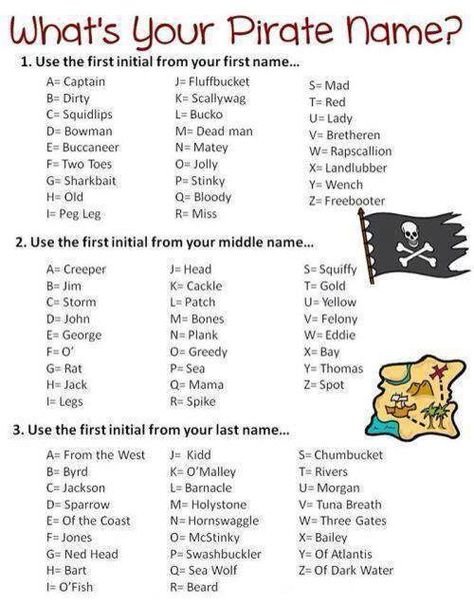
Understanding how historical pirates chose or earned their nicknames can even inspire you to create your own. Did they have a distinctive physical trait, like Blackbeard's beard or Black Sam's hair? Were they known for a particular skill, a ruthless streak, or perhaps a surprising sense of decorum, like the Gentleman Pirate? Thinking about these aspects can help you devise a name that feels authentic and compelling.
If you're eager to explore the possibilities and perhaps conjure up your very own pirate identity, a Pirate Name Generator can be a fantastic tool to spark your imagination. It allows you to delve into the creative process behind these memorable monikers, bridging the gap between historical fact and modern fantasy.
Unearthing the Truths and Tales Behind the Legends
While the romance of piracy often overshadows the brutal realities of the era, the power of a pirate's name remains undiminished. These monikers were crucial in establishing a pirate's fearsome reputation, influencing their tactics, and cementing their place in history and legend. From the terrifying presence of Blackbeard to the calculated elegance of Black Bart, each name carries a story, a legacy of adventure, and often, the tantalizing whisper of undiscovered riches.
The stories behind these famous pirates and their nicknames serve as a timeless reminder of human ambition, resilience, and the enduring appeal of the open sea. They inspire us to look beyond the surface, to understand the forces that shaped these iconic figures, and to appreciate how a simple name could become the cornerstone of a legend that echoes through centuries. The next time you encounter one of these famous pirate names, remember the multifaceted power it held—a blend of history, fear, and myth that made them truly legendary.